
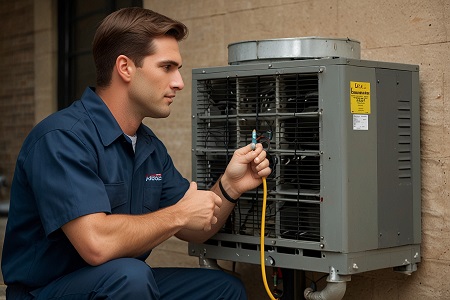
It’s easy to adopt an “out of sight, out of mind” attitude toward your home heating and cooling system. When your home feels comfortable, you don’t look closely at the outdoor condenser or open up the indoor furnace closet.
However, HVAC units rarely fail without warning. They usually drop subtle hints first. Ignoring these minor signs can lead to absolute disaster, especially when subjected to the extreme weather conditions of Dallas, Texas.
Let’s look at the most common HVAC issues homeowners tend to brush off, and the severe risks of leaving them unchecked in the North Texas climate.
1. The Subtle “Clicking” or “Humming” Noises
It’s normal for a system to make a gentle whirring sound when it kicks on. What isn’t normal is a repetitive clicking, a heavy rattling, or a loud electrical hum. Homeowners often ignore these sounds if the system is still blowing air, assuming it’s just “getting old.”
The Risk in Dallas:
That clicking is often the sound of an electrical contactor failing, while rattling usually points to loose fan blades or a dying blower motor bearing. In Dallas, where summer temperatures regularly exceed 100°F and heat indices push even higher, your system runs for hours without a break.
The extreme, relentless demand of a July heatwave will quickly turn a minor mechanical rattle into a total motor seizure. When that happens on a Saturday afternoon, your home can reach dangerous indoor temperatures of 90°F+ within a couple of hours.
2. Weak or Uneven Airflow
If one bedroom feels like a sauna while the living room is freezing, or if the air blowing from your vents feels more like a gentle whisper than a steady breeze, it’s easy to blame it on the layout of the house.
The Risk in Dallas:
Weak airflow usually means a suffocating air filter, failing motor, or severely leaking ductwork. When duct leaks are ignored in the Dallas-Fort Worth area, your system isn’t just dropping in efficiency—it is actively sucking in hot, dusty, humid air from your attic or crawlspace.
This forces your unit to run continuous cycles to combat the incoming ambient heat, causing your electric bill to skyrocket and pushing the compressor to its absolute breaking point.
3. Tiny Puddles Near the Indoor Unit
Discovering a small pool of water near your indoor closet or up in the attic is frequently dismissed as “just a little condensation.” Many homeowners simply wipe it up with a towel and move on.
The Risk in Dallas:
Air conditioners don’t just cool the air; they act as massive dehumidifiers. Dallas summers bring heavy, muggy air, meaning your system extracts gallons of water from your indoor atmosphere every single day. That water is supposed to exit your home through a dedicated condensate drain line.
A small puddle means that drain line is choking on algae, dust, or sludge. If ignored, the line will back up completely. Because many Dallas HVAC systems are located in the attic, a completely blocked drain line results in overflowing pan water that rips right through your drywall ceiling, causing thousands of dollars in structural water damage and toxic mold growth.
4. Frequent Thermostat Adjustments (Short-Cycling)
If you notice your system turning on for three minutes, shutting off, and then turning back on a few minutes later, you might just think it’s being extra efficient. This phenomenon is called short-cycling.
The Risk in Dallas:
Short-cycling is an emergency signal from your system. It usually means the unit is overheating or experiencing a critical refrigerant leak.
Texas weather doesn’t just feature summer heatwaves; our winters also bring sudden, severe cold snaps and hard freezes. Running a short-cycling system through these extreme temperature swings puts immense stress on the compressor (in the summer) or the heat exchanger (in the winter).
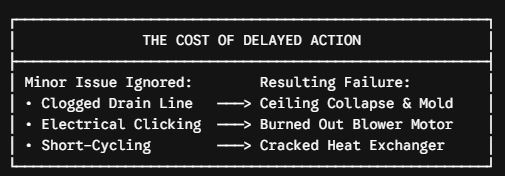
For gas furnaces, an overheating system can cause the heat exchanger to crack. A cracked heat exchanger is a worst-case scenario: it permits lethal, odorless carbon monoxide gas to leak directly into your home’s breathing air while your family is asleep during a freeze.
The Takeaway
Minor HVAC quirks are almost always a preview of a future breakdown. Given how heavily Dallas residents rely on climate control to stay safe through triple-digit summer days and unpredictable winter freezes, ignoring these signs is a massive gamble.
Listen to your system. If it makes an odd sound, smells musty, or struggles to keep up, have a professional take a look before the Texas weather forces the issue.
Need Local Help in Dallas?
If you have already gone too long without changing your filter and notice your system is short-cycling, making strange noises, or failing to blow cool air, it’s time to bring in the experts before a minor issue turns into a total system failure.
Dallas Residents: If you live in Dallas, TX, you can easily find a reliable, professional HVAC technician to inspect your system, clear out frozen coils, or handle emergency fixes. Find a local expert right away by visiting hvacrepairdallas.online.
A habit as simple as setting a monthly reminder on your phone to check the air filter can mean the difference between a minor maintenance chore and a massive, unexpected repair bill. Keep your air flowing, keep your system breathing, and keep your hard-earned money in your bank account.
Don´t wait until your HVAC needs maintenance or worse it fails, at HVAC Repair Dallas, we provide with the best HVAC Repair Service Providers in Dallas, TX and nearby areas. Find Yours Now
HVAC Repair Dallas
Other Articles That May Interest You:
10 Warning Signs Your Air Conditioner Is About to Fail
How Often Should You Service Your HVAC System in Dallas?
Why is My AC Blowing Hot Air? Posible Causes You Should Be Aware of
The HVAC Maintenance Checklist Every Dallas Homeowner Should Follow
Why Changing Your HVAC System Air Filter Could Save You Thousands in Repairs
The Most Common HVAC Problems Homeowners Ignore
0 Comments