

Discovering that your air conditioner is blowing warm or hot air can trigger an immediate sense of dread. When outside temperatures are climbing, your home should be a cool sanctuary, not an oven.
When your vents start pushing out warm air, it usually means the indoor fan is working, but the actual cooling process has broken down. In the intense North Texas climate, identifying the root cause quickly is the difference between a simple fix and a completely burnt-out system.
Here are the most common causes behind an AC blowing hot air, and how the relentless Dallas weather can trigger them.
The Checklist: 6 Reasons Your AC is Blowing Hot Air
1. Incorrect Thermostat Settings
Before checking mechanical parts, look at your thermostat. It is surprisingly easy to accidentally switch the system from “Cool” to “Heat,” or for a family member to change the setting.
The Fan Setting Trap: Check if your thermostat fan is set to “ON” instead of “AUTO.” When set to “ON,” the indoor blower fan runs constantly, even when the AC isn’t actively cooling. Between cooling cycles, it will push room-temperature or warm air through your vents. Switch it to “AUTO” so the fan only blows when the air is actively being chilled.
2. A Tripped Circuit Breaker
Your central AC relies on two separate parts: the indoor air handler and the outdoor condenser unit. If the circuit breaker powering your outdoor unit trips, the indoor fan will keep running—but because the outdoor unit is dead, the system can’t remove any heat. It will simply circulate uncooled, warm indoor air. Check your home’s electrical panel and reset the HVAC breaker if it has flipped.
3. A Clogged, Suffocating Air Filter
A heavily soiled air filter restricts the volume of air passing through your HVAC system. When airflow drops drastically, the indoor evaporator coil gets too cold and freezes solid. A block of ice on your coils acts as an insulator, stopping the system from absorbing heat. The air passing over the ice can’t be cooled efficiently, eventually resulting in lukewarm or hot air coming from your registers.
4. Low Refrigerant Levels (A System Leak)
Refrigerant is the chemical compound responsible for absorbing heat from inside your home and transferring it outdoors. Because an AC is a closed loop, it should never “run out” of refrigerant. If levels are low, you have a leak. Without enough refrigerant, the system simply cannot drop the air temperature. Look for signs like a hissing sound near the unit or physical ice forming on the copper lines.
5. Filthy Outdoor Condenser Coils
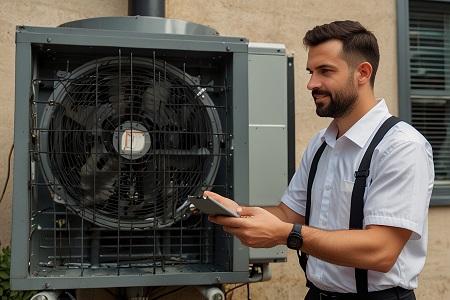
The outdoor metal unit has a massive job: expelling the heat collected from inside your house. If the condenser coils are caked in dirt, grass clippings, or pollen, they become insulated. The unit won’t be able to dump the heat into the outside atmosphere, causing the entire cooling cycle to fail and push warm air back indoors.
6. A Failed Capacitor or Compressor
The capacitor acts like a giant battery that jump-starts your outdoor compressor. If the capacitor fails due to electrical wear or overheating, the compressor won’t turn on. Without the compressor circulating refrigerant, your air conditioner is nothing more than a giant, expensive box fan.
How Dallas Weather Magnifies the Problem
While these issues can happen anywhere, the extreme climate in Dallas accelerates mechanical failures. Local weather conditions actively contribute to your AC blowing hot air in several distinct ways:
-
The Triple-Digit Thermal Load: When Dallas hits 100°F or higher, your outdoor condenser has to work in an incredibly hostile environment. Expelling heat into already boiling air requires immense pressure. If your outdoor coils are even slightly dirty, the extreme Texas heat can cause the compressor to overheat and trigger a safety shutdown, leaving you with a system that blows nothing but hot air.
-
Electrical Strain and Voltage Drops: During peak summer afternoons, the Dallas-Fort Worth power grid faces massive demand as millions of air conditioners kick on simultaneously. These localized power surges and voltage fluctuations put intense stress on your AC’s sensitive electrical components, frequently causing capacitors to blow or circuit breakers to trip.
-
The Cottonwood and Pollen Blanket: North Texas spring and early summer bring heavy amounts of airborne dust and cottonwood fluff. This debris acts like a blanket, wrapping tightly around outdoor units and blocking crucial airflow, which leads directly to system overheating and warm air production.
What to Do Next
If your AC is blowing hot air, turn the system off at the thermostat immediately. Running an air conditioner that isn’t cooling can cause the compressor to burn out permanently, turning a manageable repair into an expensive full-system replacement.
Check your thermostat settings, inspect your air filter, and verify your circuit breakers. If those basic troubleshooting steps don’t resolve the issue, it’s time to call a licensed HVAC technician to safely check refrigerant levels and electrical components before the Texas heat compromises your home.
Don´t wait until your HVAC needs maintenance or worse it fails, at HVAC Repair Dallas, we provide with the best HVAC Repair Service Providers in Dallas, TX and nearby areas. Find Yours Now
HVAC Repair Dallas
Other Articles That May Interest You:
10 Warning Signs Your Air Conditioner Is About to Fail
How Often Should You Service Your HVAC System in Dallas?
Why is My AC Blowing Hot Air? Posible Causes You Should Be Aware of
The HVAC Maintenance Checklist Every Dallas Homeowner Should Follow
Why Changing Your HVAC System Air Filter Could Save You Thousands in Repairs
The Most Common HVAC Problems Homeowners Ignore
How to Extend the Life of Your Air Conditioning System by 5+ Years
DIY HVAC Maintenance Tasks You Can Safely Do Yourself
What Happens If You Skip Annual HVAC Maintenance?
Why Is My Electric Bill So High During Dallas Summer?
15 Ways to Reduce Cooling Costs During a Dallas Heatwave
How Smart Thermostats Can Lower Your HVAC Costs
How to Choose and HVAC Contractor
5 Specific Questions You Must Ask To Your HVAC Contractor
Quick HVAC Maintenance Guide




0 Comments